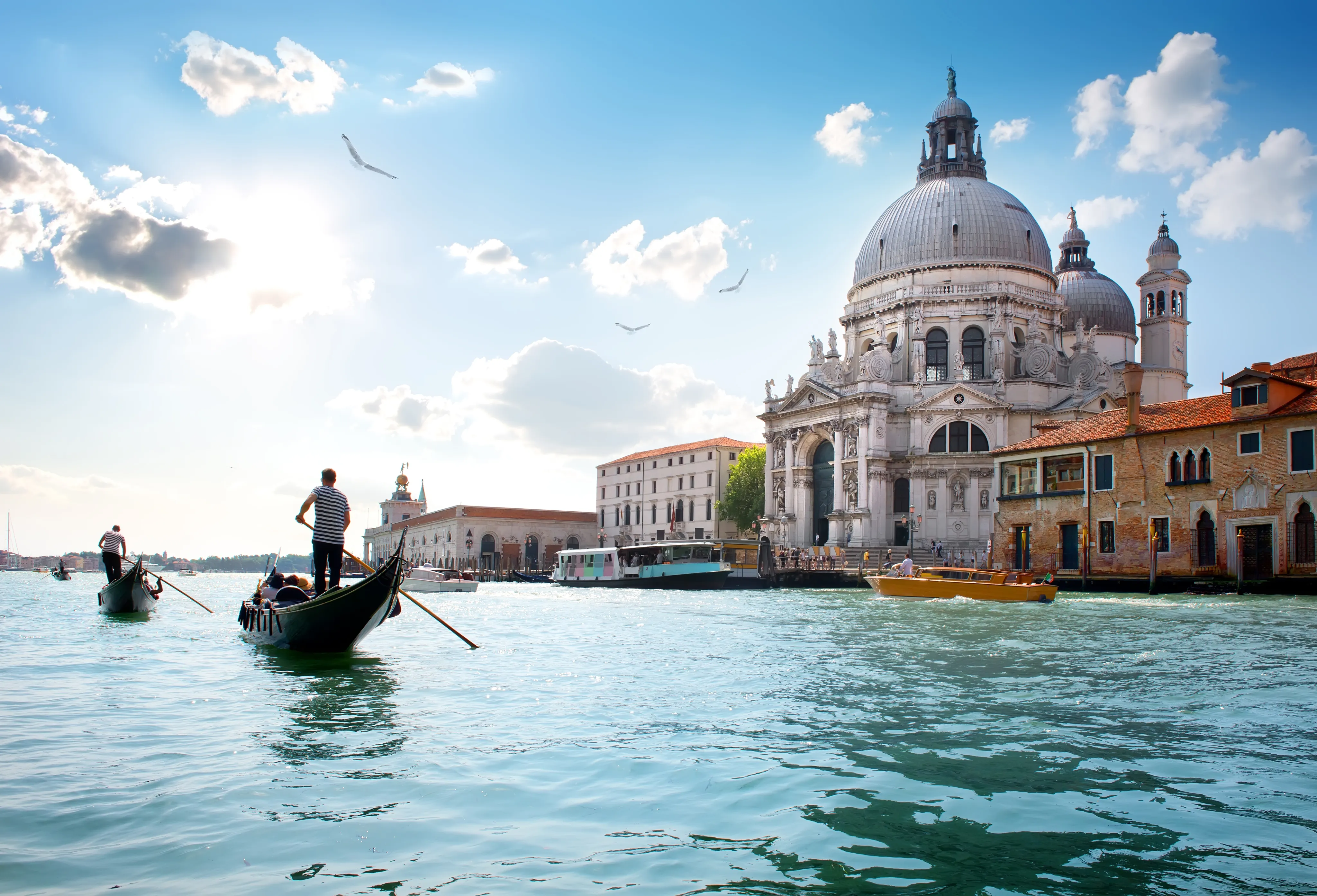
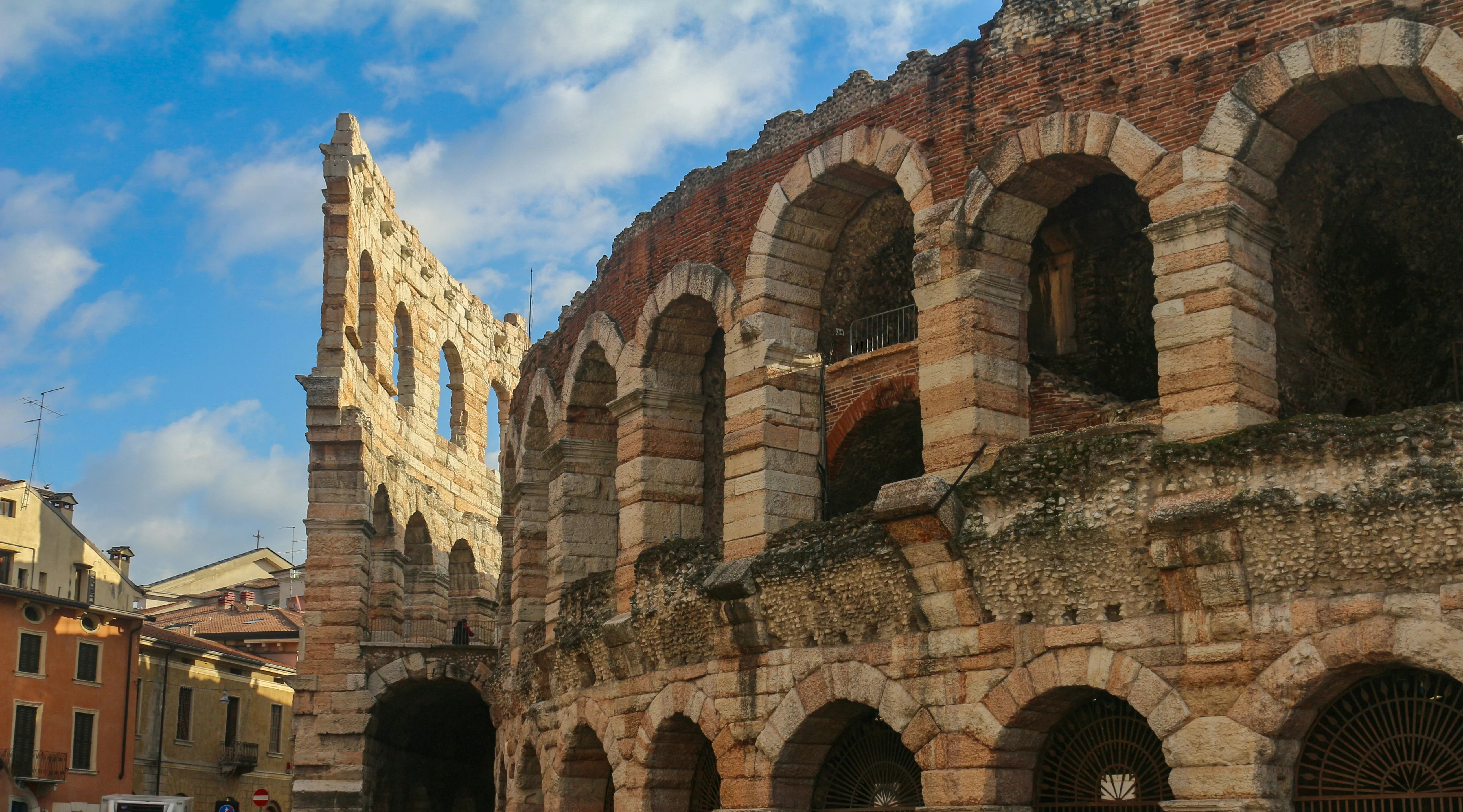
One day in Verona is enough to understand why this city has held travellers for two thousand years. The Roman Arena rises above a piazza that still functions as the city's living room. The historic centre - UNESCO World Heritage since 2000 - packs Roman foundations, medieval architecture, and Renaissance palazzi into a walkable core. And every summer from June to September, the Arena transforms into the largest open-air opera venue in the world.
This is our local guide to a single, well-paced day in Verona - the landmarks worth your time, the places to eat and drink where Veronesi actually go, the corners most visitors miss, and everything you need to attend an opera at the Arena di Verona. Venice Incoming has been operating across the Veneto Region for over twenty-five years; the recommendations below are the ones we give our own travellers every time we organize a trip for them!
Quick Facts: Verona in One Day
- Location: Verona, Veneto, northeast Italy - 1h 15min by train from Venice, 1h 45min from Milan
- Historic centre: UNESCO World Heritage Site since 2000
- Best time to visit: June–September for the opera season; April–May and September–October for fewer crowds and clearer light
- Arena di Verona Opera Festival 2026: 12 June – 12 September, 50 evenings, performances start around 9pm
- Getting there from Venice: direct High-Speed trains or regional trains from Venezia Santa Lucia to Verona Porta Nuova, journey 1h 15min–1h 30min
- Verona Porta Nuova to historic centre: 1.2 km, 15 minutes on foot or short bus/taxi ride
- Tip: book opera tickets well in advance - premier nights and weekend performances sell out by spring
- Recommended tour and directly bookable on our website: Verona in 1 Day from Venice
Morning: The Historic Centre and Its Hidden Layers
Start at Piazza Bra - the wide, arcaded square that anchors Verona's civic life. The Arena dominates one side: a Roman amphitheatre built in the first century AD from local pink-and-white limestone, surviving nearly intact after nearly two thousand years. Capacity today is up to 15,000 for opera evenings, fewer for concerts with full stage sets.
A note on context that helps here: Verona was one of the most important Roman cities in northern Italy, a strategic node between the Alps and the Po Valley. The Arena was already old when most of the medieval city was built around it. That layering - Roman foundations under medieval streets under Renaissance facades - is what gives the historic centre its character, and it is more visible here than in almost any other Italian city.
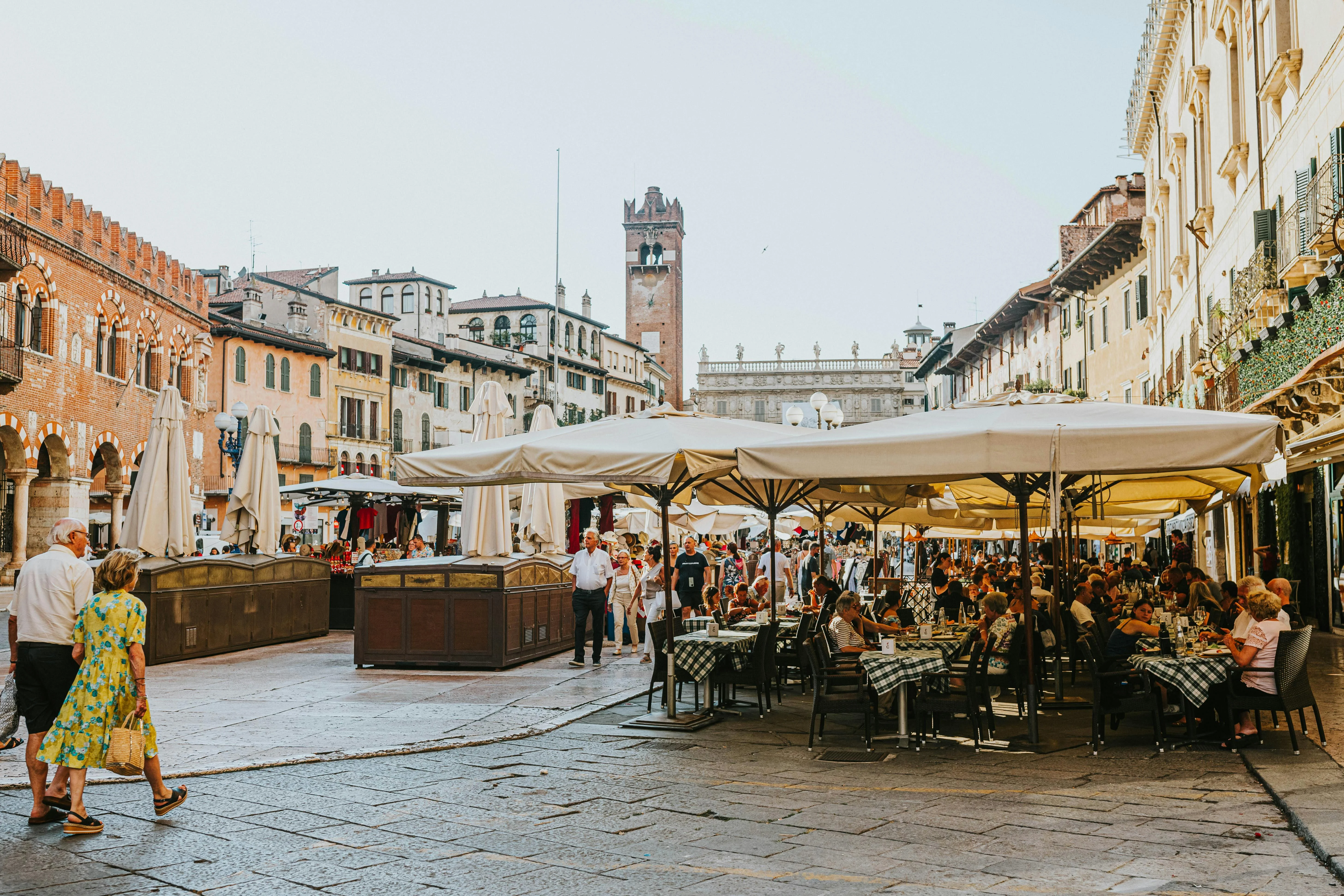
Piazza delle Erbe and the Roman Forum beneath it
Five minutes on foot from Piazza Bra, Piazza delle Erbe occupies the site of the ancient Roman forum. The market stalls are still set up here daily. The Torre dei Lamberti rises 84 metres above the square - construction began in 1172 and the tower reached its current height after a lightning strike in 1403 and the restoration that followed. The viewing platform is the best place to orient yourself if you start the day with the climb.
Piazza dei Signori and the Scaligeri tombs
Step through the arch beside the Torre dei Lamberti into Piazza dei Signori, the political heart of medieval Verona under Scaligeri rule from the late thirteenth to the late fourteenth century. A short walk northeast brings you to the Arche Scaligere - the elaborate Gothic funerary monuments of the della Scala family, among the finest examples of Gothic sculpture in northern Italy and frequently overlooked by visitors heading straight to Juliet’s House.
On Juliet's House: what it is and what it is not
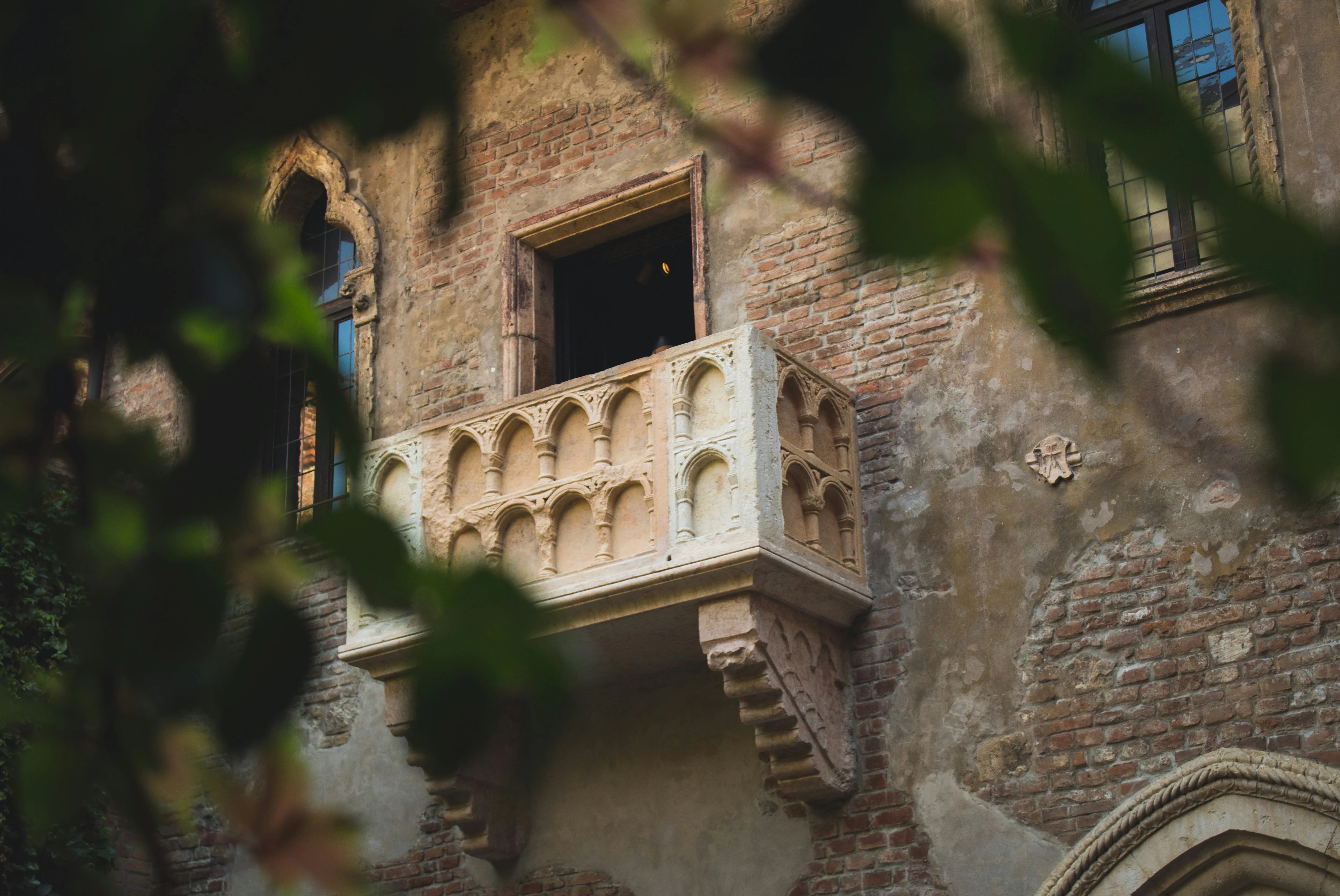
The Casa di Giulietta is on most visitors' lists. The honest version is worth knowing before you go. The house itself is a real fourteenth-century medieval building. The connection to Shakespeare's Juliet is symbolic - the famous balcony was added in the 1930s to align the building with the play, which is itself fictional. Shakespeare never visited Verona. The Capulets and Montagues are loosely based on real Veronese families, but the love story is invention. Knowing this does not necessarily ruin the experience - the courtyard is genuinely atmospheric, and the collective projection of two centuries of visitors is part of what makes the place feel charged. It is, in a quiet way, a monument to the power of stories. Give it ten minutes if you are curious; skip it if you are not.
Biblioteca Capitolare: one of the oldest libraries in the world
A short walk from the Arena, beside the Duomo, the Biblioteca Capitolare di Verona is considered the oldest continuously operating library in the world. The earliest documented evidence - the Codex of Ursicino - dates to August 517 AD. The library preserves around 1,200 manuscripts including codices that predate most European institutions, letters of Cicero rediscovered by Petrarch, and palimpsests of fundamental works of Roman law. Visits are by appointment or as part of organised guided tours. It is the kind of place most visitors to Verona never know exists.
Museo di Castelvecchio
Castelvecchio - a fourteenth-century Scaligeri fortress with a fortified bridge across the Adige - houses one of the finest collections of medieval and Renaissance art in northern Italy. The museum was redesigned between 1959 and 1973 by Carlo Scarpa in what has become a landmark of twentieth-century museum architecture. Scarpa's intervention is studied by architecture students worldwide; the way light enters certain rooms, the way sculptures sit on their bases, the way different historical layers of the building are made visible - all of it is part of the visit. Allow 90 minutes if you go inside.
Teatro Romano: the city's other Roman amphitheatre
Across the river from the historic centre, on the slope of Colle San Pietro, sits the Teatro Romano - a Roman theatre built in the first century BC, predating the Arena by several decades. It was rediscovered in the nineteenth century after centuries buried beneath later buildings. Today it hosts the Estate Teatrale Veronese summer festival; in 2026 the programme includes a special evening of Zorba il greco at the Teatro Romano, alongside Shakespeare productions and contemporary dance. The archaeological museum above the theatre is worth the climb on its own.
Explore the Veneto with a Local Expert
For visitors who want to combine the Verona day with the Valpolicella wine country, we run the perfect private full-day tour from Venice that covers both. It is one of the itineraries we have been doing longest, and one of the ones people ask about most.
Where to Eat and Drink: Verona's Wine Culture in Practice
Verona sits at the edge of three of Italy's most important wine appellations: Valpolicella, Soave, and Bardolino. The city takes its food and wine seriously in a way that does not perform for tourists. The places below are where Veronese eat - and where we send our own travellers when they ask.
Caffè Borsari
On Corso Porta Borsari, a few steps from the Roman gate of the same name, Caffè Borsari is Verona's historic coffee institution. Stop here in the morning for an espresso and a pastry before the centre fills up. The interior has barely changed in decades.
Antica Bottega del Vino
Founded in 1890 by the Sterzi brothers - though the building had been an osteria since the sixteenth century, when it was known as Osteria lo Scudo di Francia - the Antica Bottega del Vino on Vicolo Scudo di Francia is one of the most respected wine establishments in Italy. The cellar holds around 4,500 labels with a focus on Valpolicella and great Italian reds, the kitchen serves serious Veronese cuisine (risotto all'Amarone, pastissada de caval, bollito misto), and around forty-five wines are available by the glass on rotation. The Wine Spectator Grand Award has been on the wall since 2004. If you have one lunch in Verona, make it here. Book ahead.
Ristorante Maffei
In Piazza delle Erbe, Ristorante Maffei occupies a Baroque palazzo with a courtyard and a menu anchored in Veronese and Venetian tradition. Ingredients are local and seasonal. The wine list, predictably for this city, is exceptional.
The wines of the Valpolicella
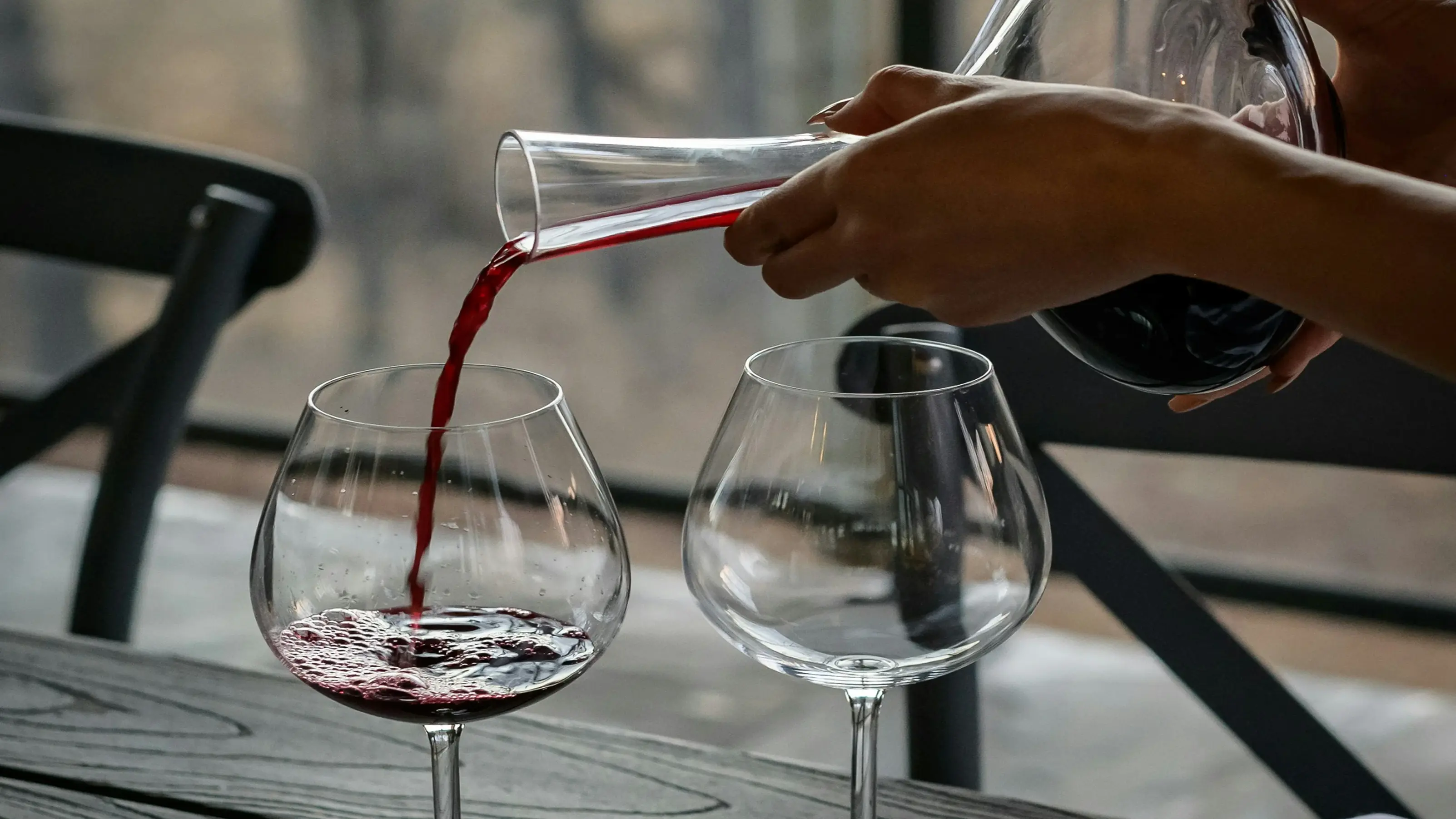
The Valpolicella hills begin just northwest of the city. Amarone della Valpolicella DOCG - made from a blend of partially dried grapes (predominantly Corvina, with Corvinone, Rondinella, and other native varieties), aged in wood for at least two years - is one of Italy's most structured red wines.
Ripasso, produced by re-fermenting Valpolicella wine on the pomace left from Amarone production, is its more approachable counterpart. Both are available by the glass throughout the city; both pair well with the slow, rich cooking of the Veneto.
Veneto for Wine Lovers - Multi-Day
For those who want to go beyond a day trip, Valpolicella and Verona can become part of a week-long journey through the Veneto region - including Padua, the Prosecco hills, and a base in Venice. It is an itinerary we have been offering for years, and one of the most natural ways to understand this part of Italy."
Artisan Shops and Historic Streets
Verona's shopping is best on the streets that predate modern retail. Via Stella and Corso Sant'Anastasia - parallel to each other and running north from Piazza delle Erbe - hold a mix of artisan workshops, independent bookshops, and historic trades that have operated in the same buildings for generations.
Gioielleria Porta Borsari
Near the Roman arch of Porta Borsari, this jewellery workshop produces pieces in the Veronese tradition. The work draws on Roman and medieval design - not mass-produced, not tourist-facing in the usual sense.
Lo Scrittoio
A stationery and paper goods shop with hand-printed notebooks, letterpress cards, and writing materials. The kind of place that still takes these things seriously. Worth a stop if you are walking Corso Sant'Anastasia.
Evening: Opera at the Arena di Verona
The 103rd Arena di Verona Opera Festival runs from 12 June to 12 September 2026 - fifty evenings of opera, ballet, and gala concerts inside a first-century Roman amphitheatre. The 2025 season drew over 400,000 spectators from 130 countries. The setting is the Arena itself: the same monument you saw in the morning, now lit by thousands of small candles held by the audience as darkness falls. The candle ritual dates back to 10 August 1913: the night of the first opera performance ever staged in the Arena, Verdi's Aida, organised to mark the centenary of the composer's birth. Audience members brought candles to honour Verdi; the tradition has continued every summer since.
The 2026 Programme
The season opened on Friday 12 June with the world première of a new production of La Traviata, directed by the Scottish opera director Paul Curran. It is the first time in the Arena's history that the production has been developed in collaboration with the Moulin Rouge of Paris - Violetta's story is reimagined in early-twentieth-century Montmartre, the red windmill and the iconic elephant from the cabaret's gardens reproduced on the Arena stage. Sets by Juan Guillermo Nova, costumes by Stefano Ciammitti (who also designed the costumes for the Olympic ceremonies at the Arena), conducting by Michele Spotti. La Traviata is staged for thirteen evenings through the season.
Other titles in the 2026 programme: Aida in two productions (the monumental Zeffirelli staging, returning for seven performances, and the visionary "crystal" Aida by Stefano Poda with transparent sets and dazzling light effects); Nabucco in a Stefano Poda production; La Bohème; and Turandot, in a Zeffirelli production marking the centenary of the opera's 1926 première. Roberto Bolle & Friends returns for an evening of dance on 21 July.
Practical information for first-timers
- Tickets: book directly at arena.it or through authorised resellers; opening nights and weekends sell out months ahead
- Seating: numbered seats (poltrona, gradinata numerata) on the lower tiers; unreserved stone steps (gradinata) on the upper tiers - cheaper, but stone, and they fill from 7pm for the best positions
- What to bring: a cushion for the stone seats (vendors sell them around Piazza Bra), a light jacket - the Arena cools noticeably after midnight - and a small bag (large bags are not permitted)
- Dress code: no formal requirement, but many in the audience dress for the occasion; the atmosphere warrants it
- Rain policy: light rain rarely interrupts a performance; the decision in heavier weather is made on the night and announced via the official Arena channels
- Duration: typically 3 hours plus interval; performances starting around 9pm finish close to midnight or later
- The candles: distributed before the performance and lit as the conductor takes the podium - a moment that takes most first-time visitors by surprise
Build Your Verona Evening with a Local Partner
For those who want to combine the opera with a guided day in the city - or who are travelling from Venice and want the logistics handled end to end - we put together tailor-made programmes that include the transfer, a city itinerary, and opera tickets.
Request a tailor-made itinerary →
Before the Curtain: Aperitivo in Piazza Bra
The hour before an opera at the Arena has its own rhythm. The bars under the Liston - the long colonnade lining the south side of Piazza Bra - set their tables facing the amphitheatre. By 8pm the square fills with people dressed for the evening, prosecco in hand, the Arena lit behind them. Reserve a table the day before and arrive by 7:30 if you want the view. After the performance, several restaurants near Piazza Bra stay open past midnight for the post-opera crowd - and sometimes for the artists.
Frequently Asked Questions
Is one day in Verona enough?
For a first visit focused on the historic centre and an evening at the opera, yes (please check our one-day tour of Verona). The UNESCO-listed historic centre is compact and walkable: the Arena, Piazza delle Erbe, the Scaligeri tombs, and the Castelvecchio are all within a 20-minute walk of each other. A full day - arriving in the morning, leaving after the opera - gives you enough time to see the essential sites, have a proper lunch, and attend an evening performance without feeling rushed.
When does the Verona Opera Festival start in 2026?
The 103rd Arena di Verona Opera Festival opened on Friday 12 June 2026 with the world première of a new production of La Traviata, directed by Paul Curran. The season runs through 12 September 2026 with fifty evenings of performances. Titles include La Traviata, Aida (two productions), Nabucco, La Bohème, Turandot, and Roberto Bolle & Friends.
What time does the opera start at the Arena di Verona?
Performances in the early summer season typically begin around 9pm - opening nights of La Traviata 2026 start at 9:30pm. Times may shift slightly later in June and earlier in August and September. Plan to arrive 45 minutes early; for unreserved stone seats, arriving by 7pm gives you a better choice of position.
What should I wear to the opera in Verona?
There is no formal dress code, but the atmosphere is festive and many in the audience dress for the occasion - smart casual to evening wear is the norm. More practically: bring a light jacket or layer, as temperatures in the Arena drop noticeably after midnight. Stone seats are hard; a cushion (sold by vendors outside the Arena) makes a 3-hour performance considerably more comfortable.
What happens at the Verona opera if it rains?
The Arena is an open-air venue with no roof. Light rain rarely stops a performance; the decision in heavier weather is made by Arena management on the night and announced through official channels and at the gates. A small folding poncho is worth carrying if the forecast is uncertain. Cancellations are uncommon but do occur - check the Arena's official website on the day of the performance.
Where should I eat before the opera in Verona?
Ristorante Maffei (Piazza delle Erbe) and Antica Bottega del Vino (Vicolo Scudo di Francia, 3) are both within 10 minutes' walk of the Arena and both serve in the early evening. For a lighter pre-opera option, the aperitivo bars under the arcades of Piazza Bra - directly facing the Arena - are the traditional choice. Book the day before during opera season.
How do I get from Venice to Verona?
Direct trains run frequently from Venezia Santa Lucia to Verona Porta Nuova. The Frecciabianca and Frecciarossa trains take around 1 hour 15 minutes; regional trains take around 1 hour 30 minutes. Verona Porta Nuova is 1.2 km from Piazza Bra - about 15 minutes on foot, or a short bus or taxi ride. For groups, evening performances, or travellers arriving with luggage, a private transfer from Venice removes the timing constraints around train schedules and is often the most practical option for an opera night.
Plan Your Next Italian Adventure with a Trusted Local Partner
Wherever Italy calls you - through Venice's quiet canals, the vineyards of the Veneto, or the country's wider cultural landscapes - travel becomes richer with someone local by your side. With over 20 years of experience crafting journeys for travelers, groups, and global partners, Venice Incoming creates experiences that are seamless, authentic, and shaped by true on-the-ground insight.
Start planning your journey with our most useful resources:
- Multi-Day Travel Packages
- Tailor-Made Itineraries
- Daily Tours & Activities in Venice and Veneto
- Private Transfers Services
- B2B & Group Travel Support
Wherever you choose to go next, we're here to help you experience Italy with confidence and local expertise.