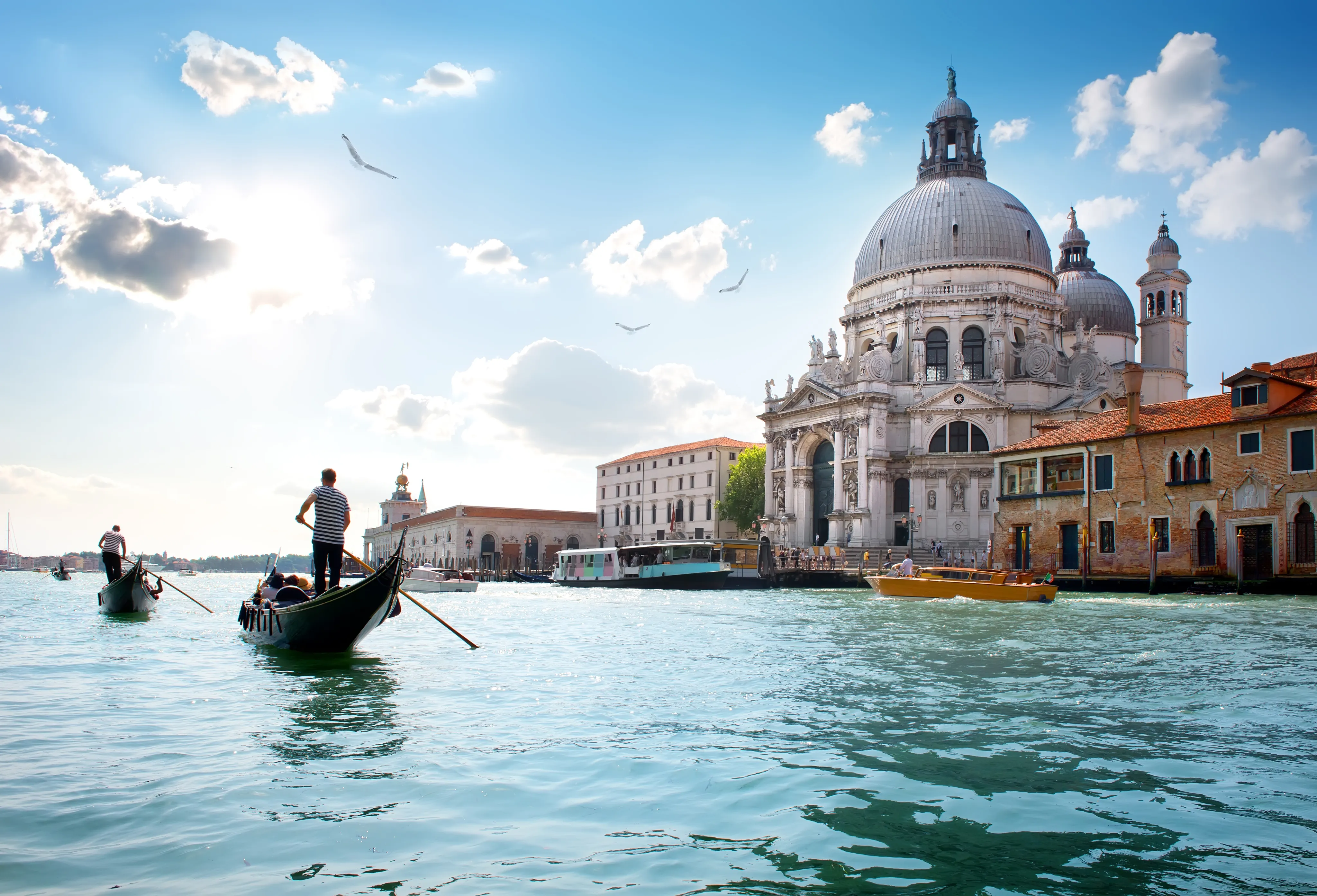
Venice is a city where artisan workshops are still active today, among historic ateliers and contemporary studios.
Behind discreet doors and along quiet calli, artisans continue to blow glass, weave velvet, carve oars, print paper, and transform raw materials into objects that preserve centuries of knowledge. For visitors, this opens up a different way of experiencing Venice: not as a sequence of monuments, but as a network of living workshops to be explored through curated itineraries.
In this context, exploring Venice through its artisans becomes not only possible, but one of the most concrete ways to understand how the city still functions today.
Artisanship is not concentrated in a single location, but unfolds across islands, sestieri, and ateliers that are often not immediately accessible without context.
What this article covers
- Murano glass between tradition and contemporary design
- Masks, textiles, and wearable craftsmanship in the historic center
- Materials and production: wood, metal, and mosaic
- Paper, print, and creative studios
- Bookshops as cultural spaces
- How to experience Venetian craftsmanship through thematic itineraries
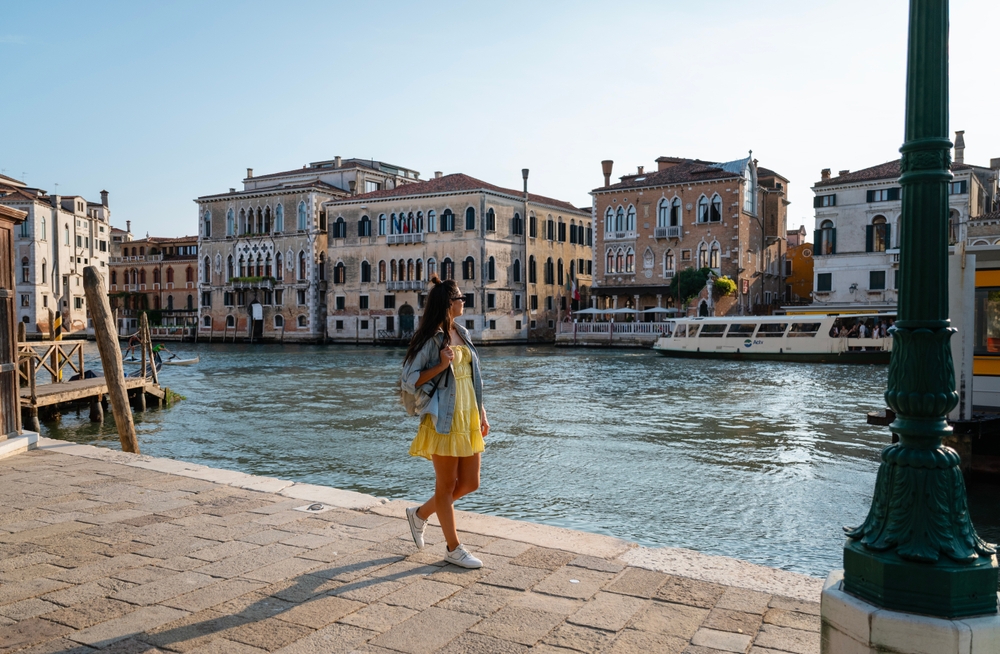
A City Where Craft Is Still Alive
Venetian craftsmanship is not preserved behind glass. It is still practiced every day.
Across the lagoon, there is a constant dialogue between historical techniques passed down through generations, contemporary reinterpretations of design, and new materials also linked to more sustainable practices.
This vitality is reinforced by a rich annual calendar:
- Venice Fashion Week (April and October) with open atelier days
- The Venice Glass Week (September)
- Homo Faber at Fondazione Giorgio Cini (September)
- Venice Design Week (October)
- Salone dell’Alto Artigianato at the Arsenale (October)
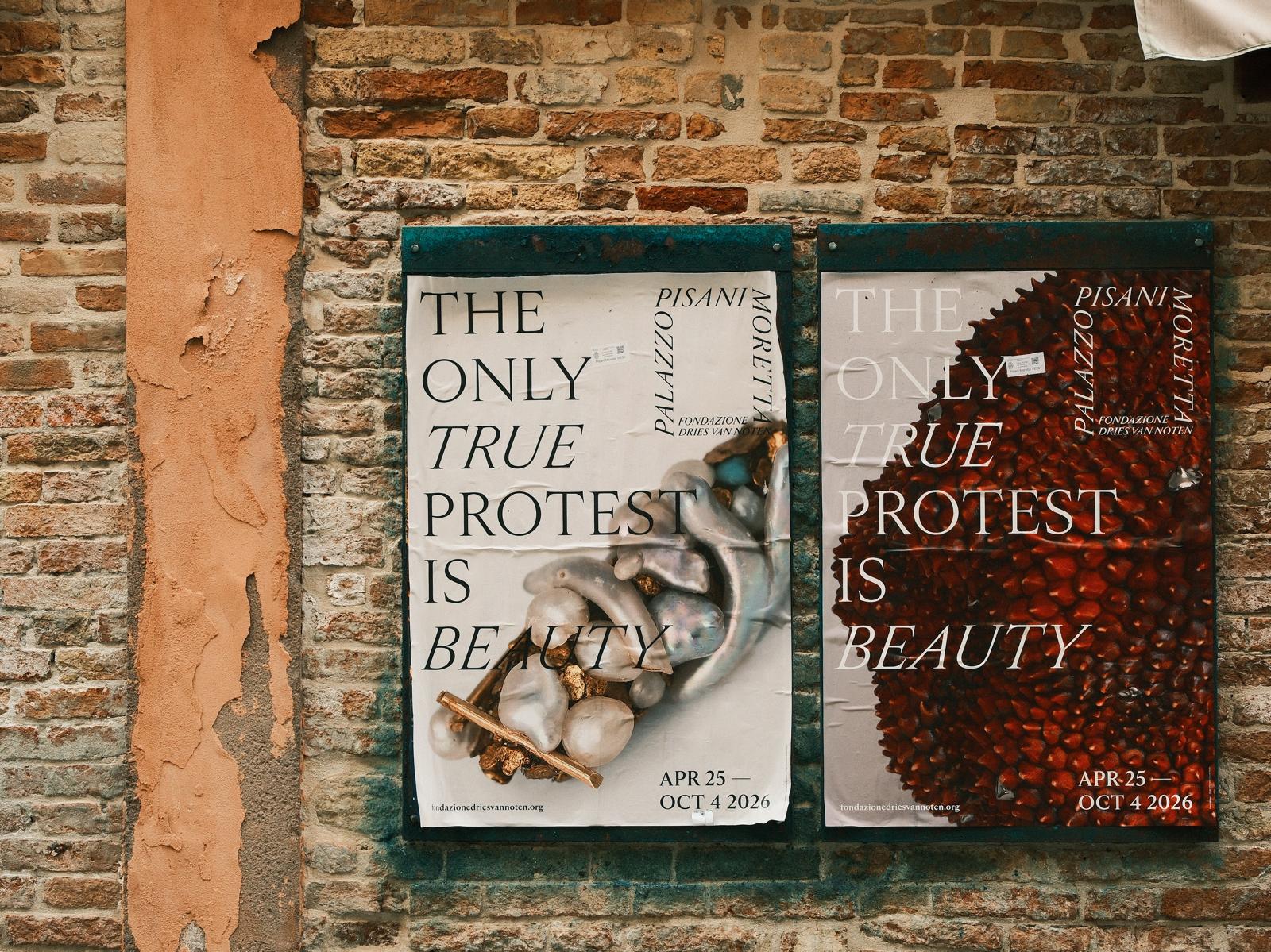
From April 2026, the opening of the Dries Van Noten Foundation at Palazzo Pisani Moretta further strengthens Venice’s position as a global reference point for high craftsmanship and interdisciplinary creation.
Murano and the Language of Glass
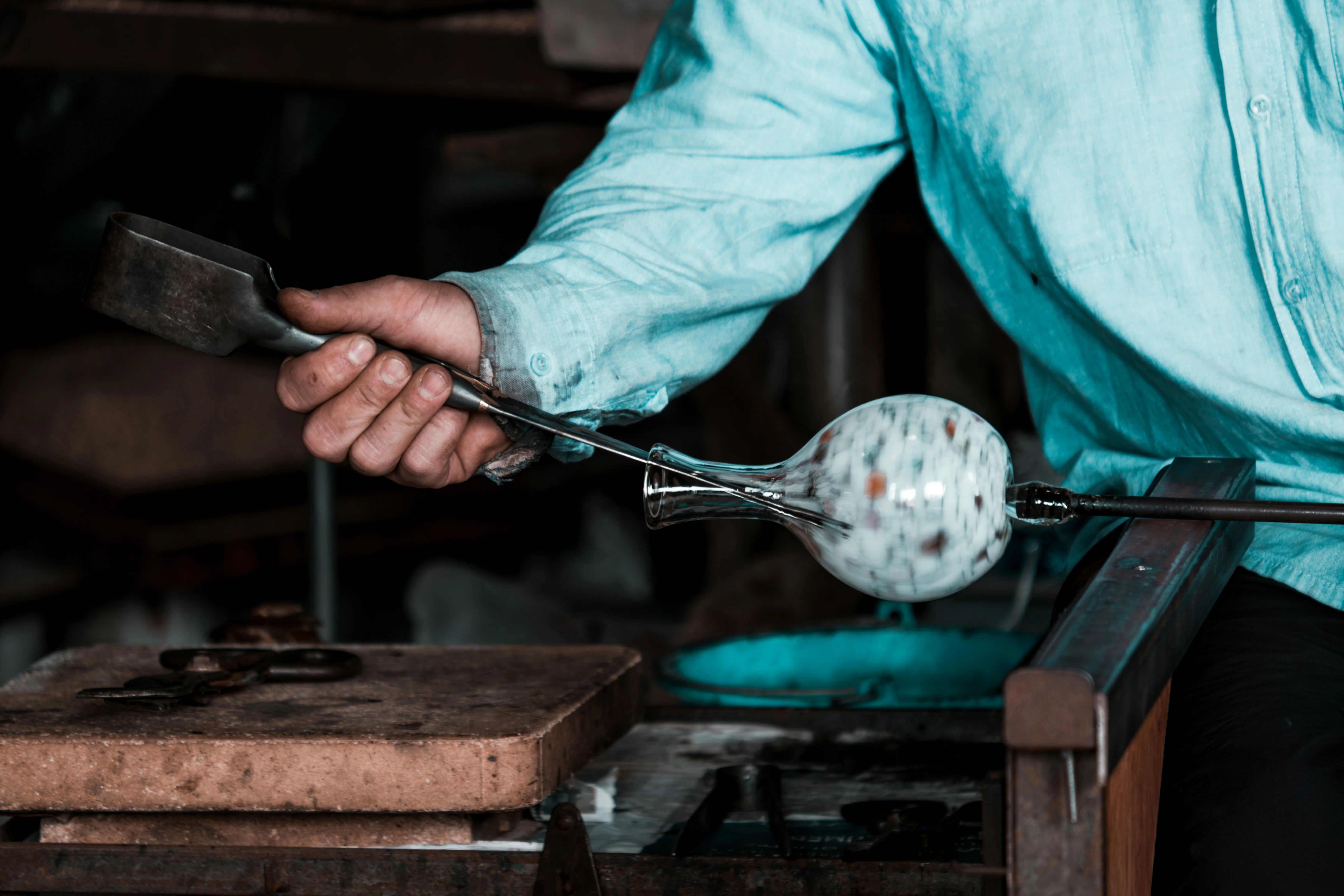
A short distance from Venice lies Murano, where glass has been worked since the 13th century.
Inside an active furnace, the experience is immediate: the intense heat from the ovens, the molten glass gathered and shaped in seconds, and the coordinated movements between master and assistants immediately reveal the complexity and precision required by this craft.
Murano today is not only tradition, but a structured system of furnaces, studios, and brands with very different approaches. The realities present on the island are numerous; the following is a selection designed to offer a clear overview of the different expressive philosophies of Murano glass, between artisanal continuity and contemporary experimentation.
- Vetreria Rossetto, one of the companies carrying forward a tradition of artistic glass rooted in mid-20th-century excellence
- NasonMoretti, where glass becomes essential and refined tableware
- Berengo Studio, connecting master glassmakers with international contemporary artists and the Biennale
- Micheluzzi Glass, inspired by Venetian textures and atmosphere
- Laguna-B reinterprets the goto de fornace with a contemporary identity, integrating strong attention to sustainability and circular production through the use of recycled glass
- Marisa Convento preserves the tradition of the impiraresse, the historic Venetian artisans specialized in hand-stringing glass beads, an activity that for centuries represented a fundamental element of the lagoon’s domestic economy
What visitors actually do
A well-structured experience in Murano generally includes a private boat transfer to the island, followed by guided access to an active furnace, where visitors attend a live demonstration with a master glassmaker and dedicate time to understanding techniques, tools, and materials.
In more immersive formats, it is also possible to participate directly in a practical glass-blowing session, as included in the experience Venice Handcrafted: a Journey through Art and Traditions.
Masks, Textiles and Wearable Craft in the Historic Center
Back in Venice, craftsmanship unfolds across the sestieri. Many workshops are not immediately visible: entering them often requires guidance and context.
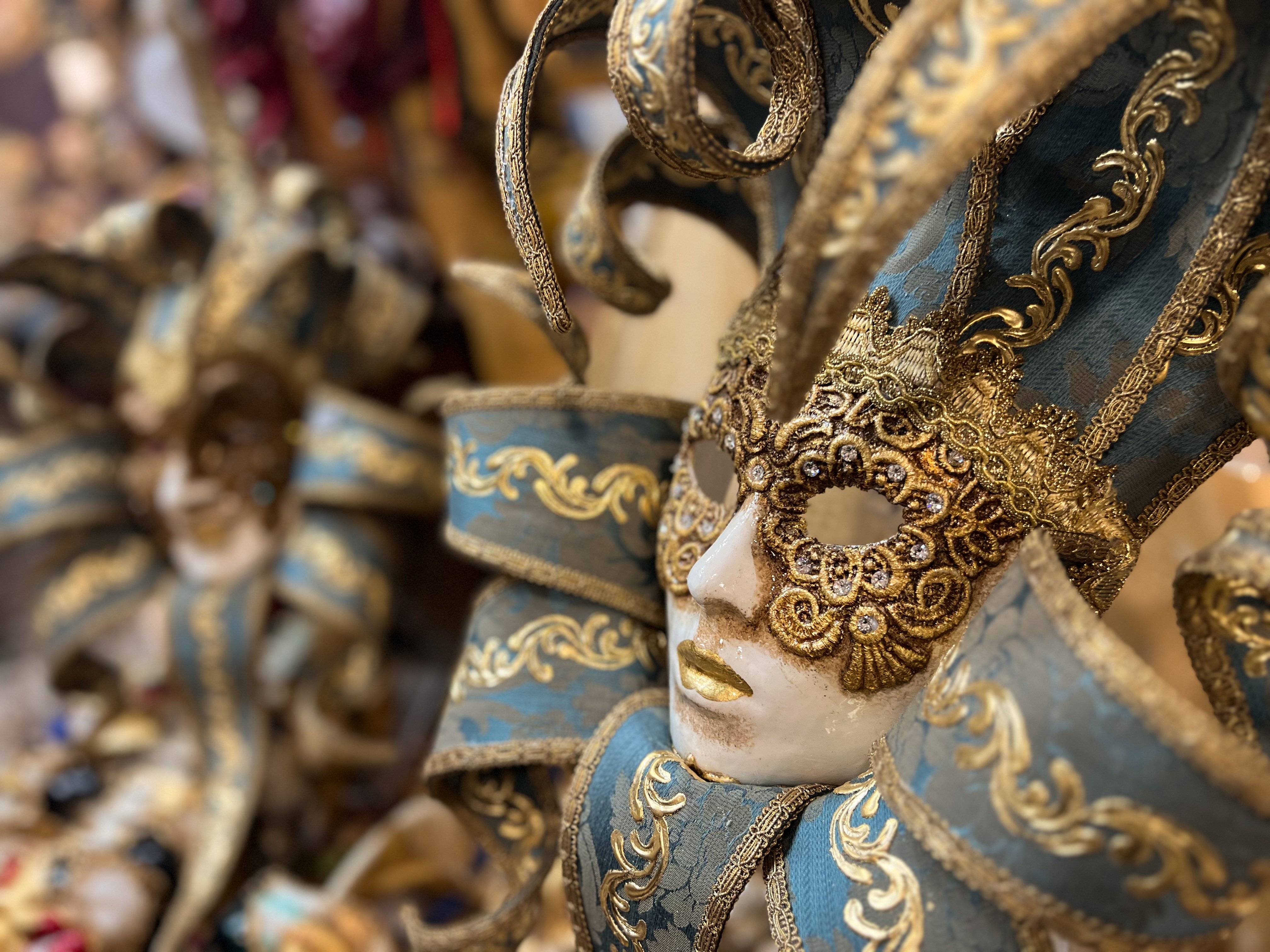
Masks: the art behind Carnival
In traditional ateliers such as La Bauta, masks are still made entirely by hand, from papier-mâché modeling to natural drying processes, up to the final decoration carried out with great precision.
During a Mask Decoration Workshop, visitors discover the history and meaning of Venetian masks, work on a traditional base, and use acrylic colors, feathers, ribbons, and decorative elements to complete a personalized creation to take home.
This is not a demonstration, but an active creative moment guided by a professional artisan.
Venice: historic capital of silk and velvet
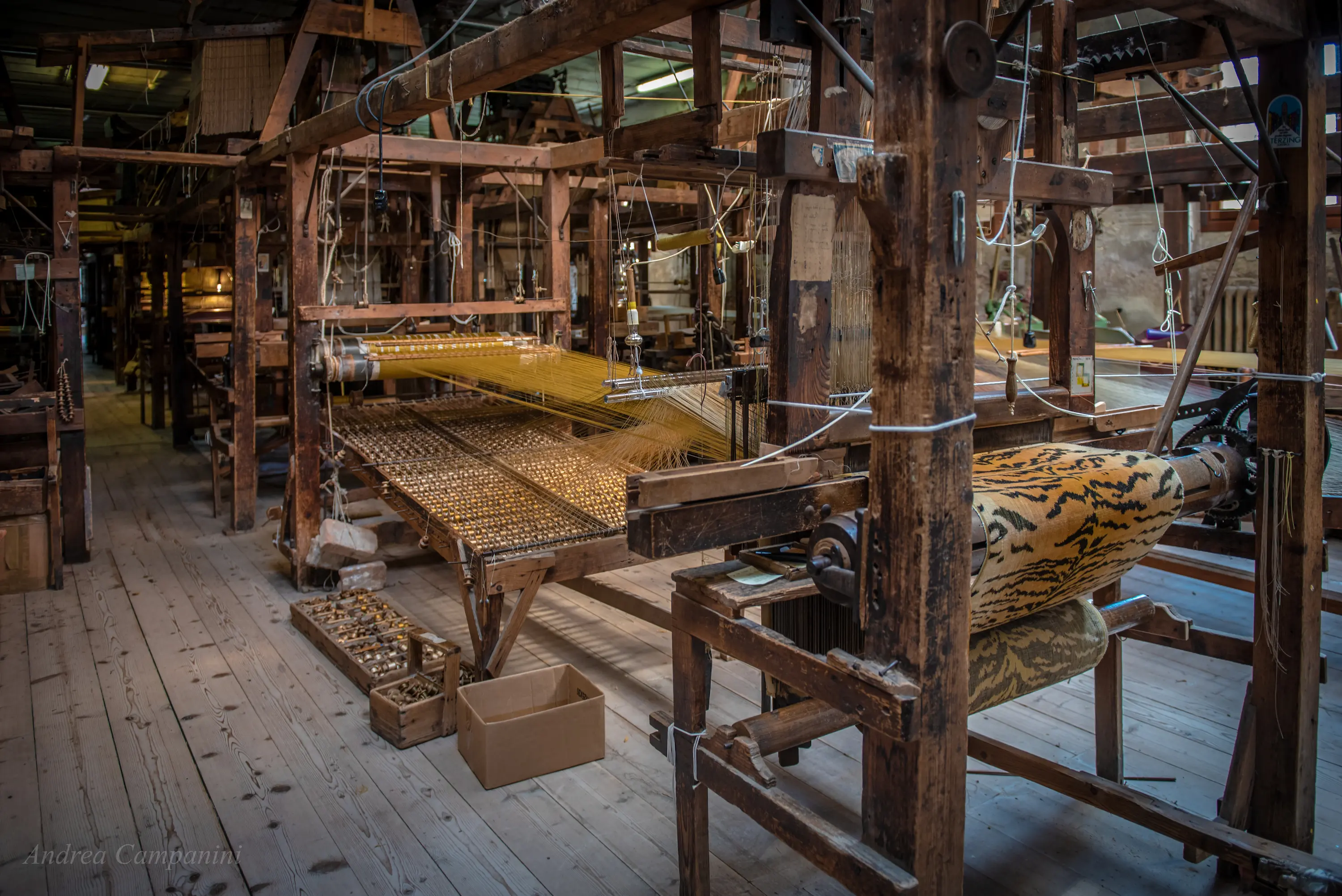
Few visitors know that Venice was one of the main European centers for luxury textiles.
This heritage is still alive.
At Tessitura Bevilacqua, overlooking the Grand Canal, original 18th-century looms are still in use, with which velvet is woven entirely by hand following patterns that reflect Venetian Renaissance heritage.
Around this historical core, a network of contemporary ateliers expands the narrative. Nicolao Atelier operates between craftsmanship and performing arts, creating costumes for cinema and theater, while Fortuny continues Mariano Fortuny’s legacy by combining textile innovation and artistic research.
At the same time, more recent practices introduce new materials and values: Ramosalso works on upcycling silk and vintage ties, while Tabinotabi experiments with fibers derived from algae and eucalyptus, reflecting growing attention to sustainability.
Wearable craftsmanship also includes highly specialized traditions. Giuliana Longo, active in a historic workshop since the early 20th century, continues the art of the bareteri, producing gondolier hats and handwoven Panama hats. In a different field, Valeria Boncompagni uses lost-wax casting to create sculptural jewelry.
Experiencing textiles in Venice
The experience The Secrets of Venetian Textiles offers a structured way to explore this world through a guided route that combines artisan visits and historical context.
Over the course of the morning, visitors move between three distinct locations, starting from a historic weaving workshop where original 18th-century looms are still in use and where it is possible to closely understand the production of Venetian velvets and brocades.
The route continues to Palazzo Mocenigo, Museum of Textiles and Costume, where garments, accessories, and environments tell the evolution of Venetian style between the 17th and 18th centuries, alongside a route dedicated to the history of perfume that also includes an olfactory experience.
The visit concludes in a historic workshop in the center of Venice, linked to the tradition of tabarri and accessories, offering a more informal yet authentic glimpse into the continuity of local craftsmanship.
This is a guided itinerary that connects different realities while providing context on materials, techniques, and historical uses.
Wood, Metal and Mosaic: The Material Venice
Some of Venice’s most authentic crafts are directly linked to its unique geography.
Gondolas and the art of wood
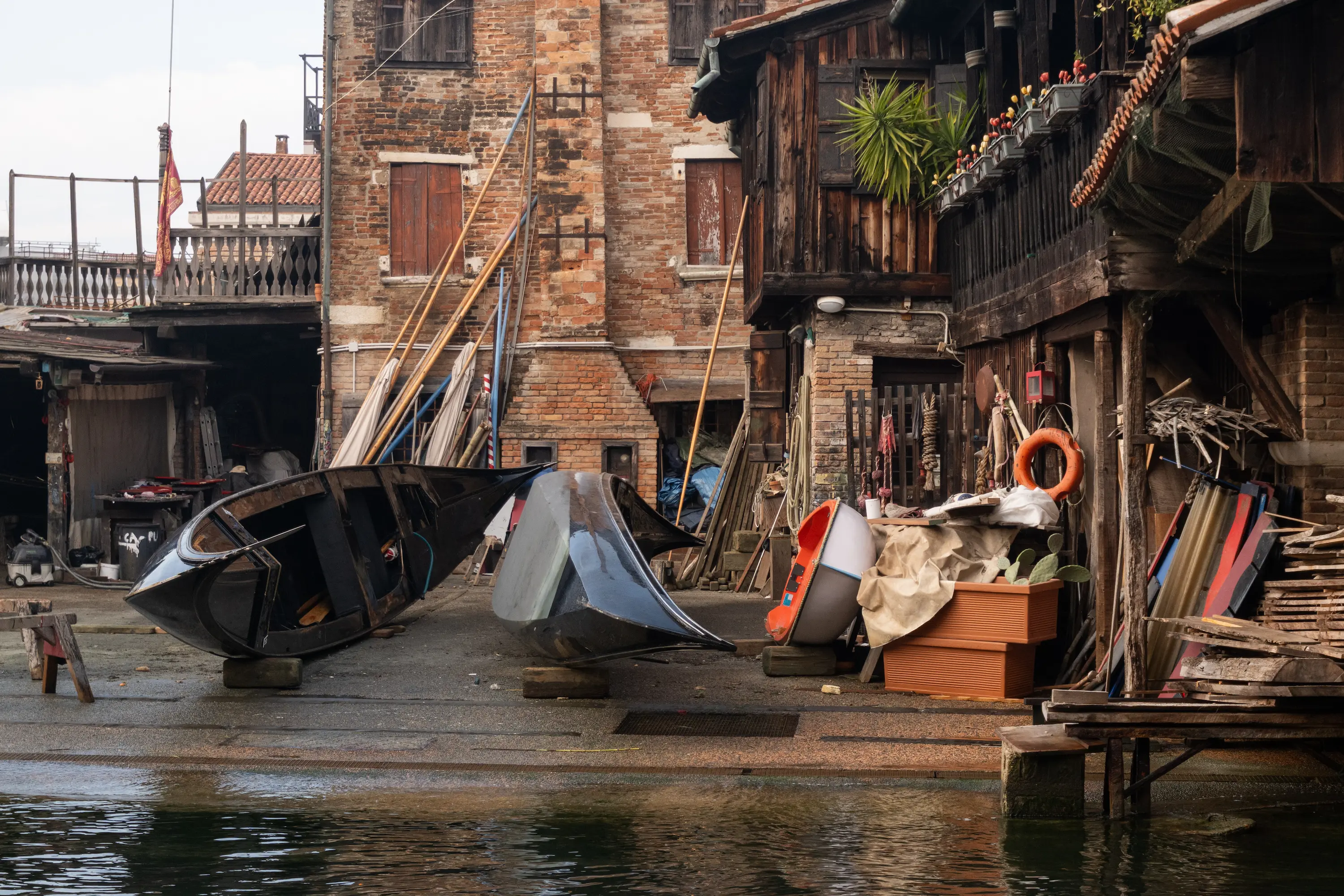
At the Squero of San Trovaso, active since the 17th century, gondolas are still built and repaired by hand. The process involves combining different types of wood, each selected for specific mechanical properties, creating boats that are both functional and highly refined, following techniques that have remained largely unchanged over time.
Guided visits allow access inside the squero, offering a direct view of the different stages of production and a deeper understanding of gondola construction.
Nearby, Saverio Pastor continues the tradition of the remeri, carving the forcole, the characteristic oarlocks used in Venetian rowing, each individually shaped and often considered collectible objects.
Fire, metal and mosaic
Other material traditions include:
- Fonderia Valese, continuing bronze and brass casting
- Orsoni, active since 1888, still producing mosaic tesserae in traditional furnaces
Contemporary material experimentation
At Materialmente, on Giudecca, metal, glass fragments, and reclaimed materials are transformed into contemporary objects through an approach that combines traditional materials with a modern design language.
What the visitor experiences
Visits dedicated to Venetian crafts and materials are generally organized by reservation and guided, with a focus on direct observation and interpretation of artisanal processes.
Often integrated into broader itineraries, they allow visitors to more concretely understand how Venice is built, maintained, and transformed over time through the work of specialized artisans.
Paper, Print and Creative Expression
Venice was historically one of the main European centers for printing and book production, and this tradition continues today through a structured network of workshops and studios.
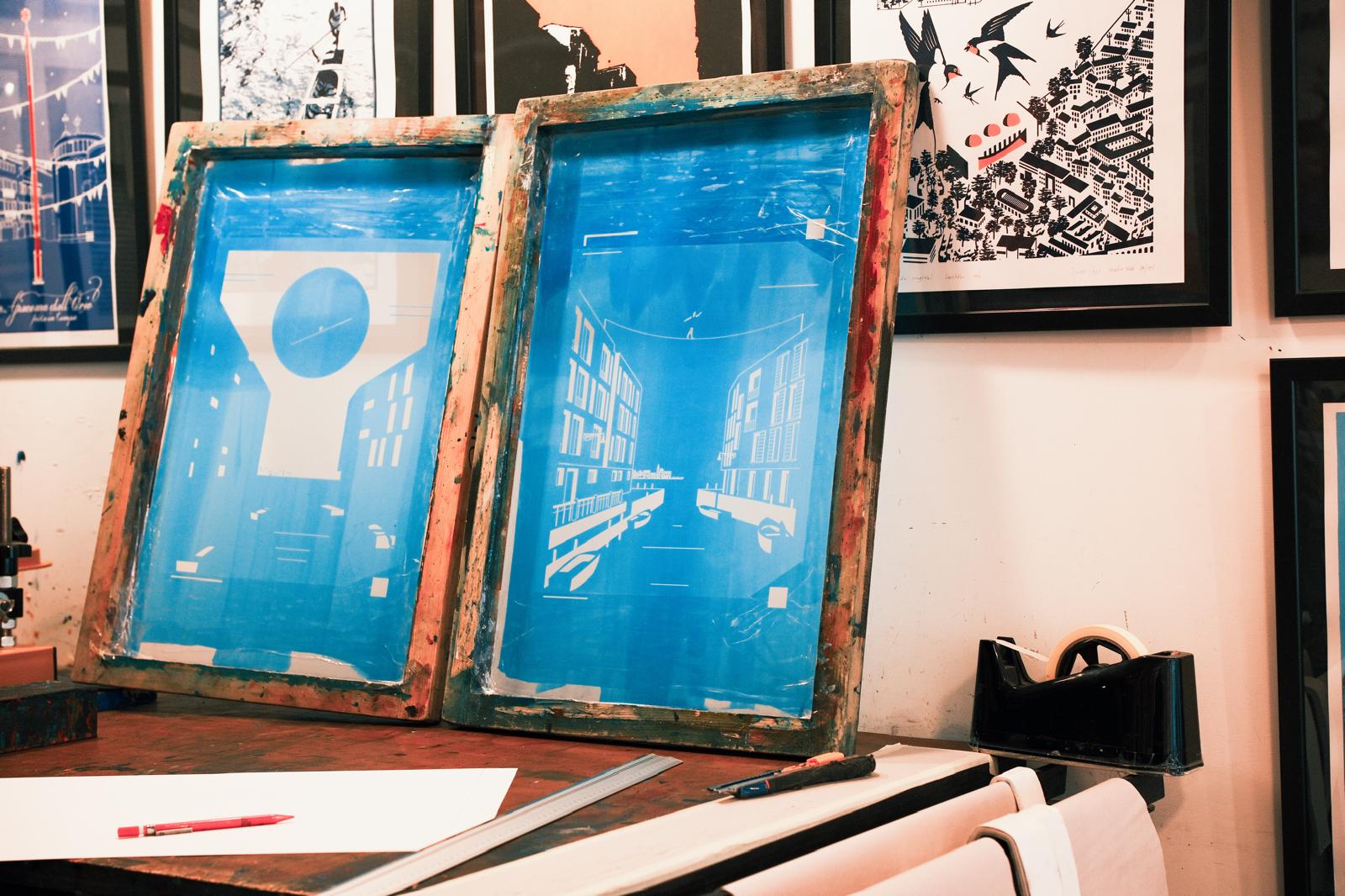
Fallani Venezia has been producing art screen prints since 1968, while Paolo Olbi combines techniques inspired by the Renaissance with a contemporary aesthetic in his bookbinding work.
Alongside these practices, more experimental approaches develop in studios such as Paperoowl, which creates sculptural paper objects, Small Caps, known for an ironic and unconventional visual language, and Garance & Marion, which offers accessible and poetic artistic graphics.
Discovering these artistic realities allows visitors to approach the artisanal soul of Venice directly, between tradition and contemporary experimentation. During these experiences, it is possible to closely observe printing and bookbinding techniques, but also participate in small creative workshops that allow direct interaction with these crafts.
Bookshops as cultural spaces
Venice has historically been a center of editorial production and knowledge dissemination, and this dimension is still visible today through a network of independent bookshops that function as true cultural spaces.
Some of these realities, different in identity and specialization, allow visitors to explore the relationship between the city, books, and its intellectual tradition:
- Libreria Acqua Alta, with its unconventional layout, ideal early in the morning or in low season
- Libreria La Toletta, a reference point for Venetians since 1933
- Filippi Editore, custodian of local traditions and knowledge
- Libreria Marco Polo, dedicated to independent publishing
- Linea d’Acqua, specialized in rare books and antique prints
- Mare di Carta, dedicated to navigation and maritime culture
These places are often included in thematic cultural routes that enrich their offering.

How to experience Venetian craftsmanship today
Many workshops are active production spaces and not open to spontaneous visits. The most effective way to discover them is through guided itineraries with experts in Venetian arts, costume, and craftsmanship, pre-arranged visits to selected ateliers, and, when possible, practical workshops that allow direct involvement.
A multi-day immersion into artisan Venice
The Venice Handcrafted: A Journey into Artisan Heritage experience offers a complete 4-day immersion.
During the program, visitors:
- access carefully selected ateliers across Venice
- take part in a hands-on glassblowing experience in Murano
- visit a historic costume atelier
- explore Squero di San Trovaso with expert guidance
- follow a curated journey through materials, techniques, and stories
It is designed as a coherent itinerary where each experience builds on the previous one.
Tailor-made artisan itineraries
Artisan experiences are particularly suited to custom-designed journeys.
Depending on interests, itineraries can focus on:
- Murano glass and contemporary design
- textiles, fashion, and costume
- traditional crafts such as wood, metal, and mosaic
- creative studios and modern makers
Each itinerary can combine private visits, thematic walking routes, workshops, and demonstrations, developing into multi-day programs depending on interests and available time.
All experiences are organized in close collaboration with artisans, ensuring meaningful access and respect for their work. Send us your request here.
A Final Note on Responsible Visiting
Artisans in Venice are not performers. They are professionals working within demanding production schedules.
Respectful visiting means:
- small groups
- pre-arranged access
- guided interpretation
- awareness of time and space
This approach allows visitors to engage meaningfully while supporting the continuity of these crafts.
Plan Your Next Italian Adventure with a Trusted Local Partner
Wherever Italy calls you - through Venice’s quiet canals, the vineyards of the Veneto, or the country’s wider cultural landscapes - travel becomes richer with someone local by your side. With over 20 years of experience crafting journeys for travelers, groups, and global partners, Venice Incoming creates experiences that are seamless, authentic, and shaped by true on-the-ground insight.
Start planning your journey with our most useful resources:
- Multi-Day Travel Packages
- Tailor-Made Itineraries
- Daily Tours & Activities in Venice and Veneto
- Private Transfers Services
- B2B & Group Travel Support
Wherever you choose to go next, we’re here to help you experience Italy with confidence and local expertise.