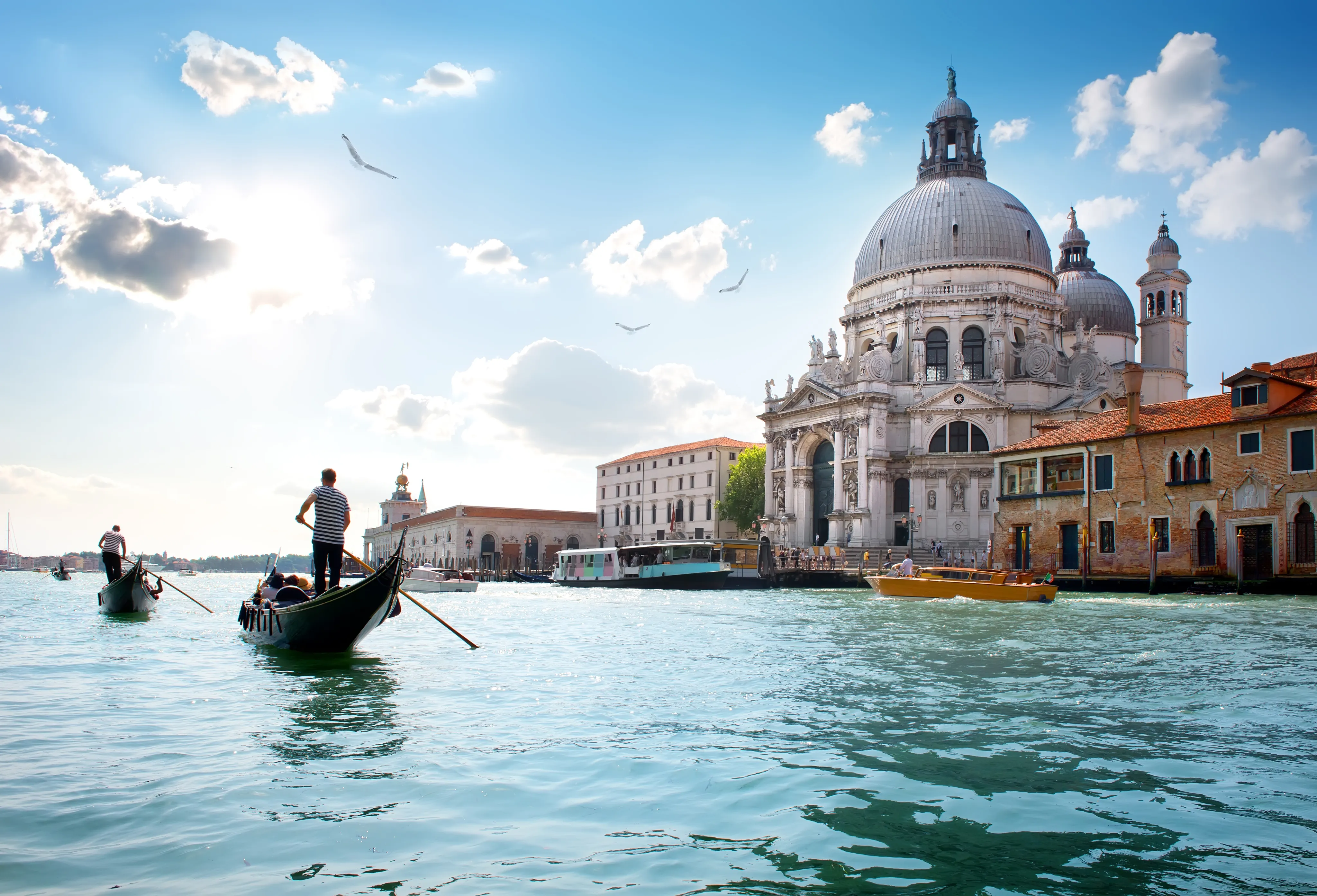
The barrier islands of the Venetian Lagoon are where Venetians actually spend their summers. While the historic centre fills with visitors in July and August, locals take the vaporetto south - to Lido di Venezia, to the medieval borgo of Malamocco, to the narrow fishing island of Pellestrina. These are places that most tourists never reach, and that is precisely the point.
Lido, Pellestrina and Malamocco are not a day trip afterthought. They are a different way to experience Venice: on a bicycle along the Murazzi, at a table facing the lagoon with a plate of fresh clams, in a village where time moves at a different pace entirely. The team at Venice Incoming has been running lagoon experiences and guiding travellers across these islands for over two decades - what follows is built on that experience.
Quick Facts
- Location: barrier islands between the Venetian Lagoon and the Adriatic Sea, south of Venice historic centre
- Getting there: vaporetto from Venice (lines 1, 2, 5.1, 5.2, 14 to Lido Santa Maria Elisabetta); ferry from Tronchetto for bikes and cars; bus 11 from Lido connects to Pellestrina via ferry
- Best time to visit: May-September for beaches and cycling; year-round for Malamocco and Pellestrina village life
- Beach quality: Lido beaches hold the Blue Flag certification for water quality and facilities - one of the few urban beaches in Italy to earn it consistently
- Distance from San Marco: 20 minutes by vaporetto to Lido
- Cycling: flat terrain, suitable for all fitness levels; bike hire available near the Lido ferry dock
- Local expertise: Venice Incoming has operated guided lagoon experiences across these islands for over 20 years - ask us about tailor-made options
Should You Stay in Lido Instead of Venice? A Genuine Question Worth Asking
In summer, it is worth considering. Lido di Venezia is connected to the historic centre by frequent vaporetto (the Venetian water-bus) rides - the crossing takes around 20 minutes - and accommodation on the island is generally less expensive and easier to find. In July and August especially, the combination of a real beach and quick access to Venice makes Lido a legitimate base for your stay.
The island has cars, roads, and bicycles. For some travellers, the shift of pace from Venice’s pedestrian labyrinth is a relief rather than a compromise. Liberty-style villas line the main boulevards. The lungomare stretches along the Adriatic. In the morning you can be on the beach; by early afternoon you can be at Piazza San Marco.
For families and longer stays in particular, Lido functions as a seaside town with Venice as a day trip rather than the other way around. The Venice Film Festival happens here every August–September at the Palazzo del Cinema, which gives the island a different kind of cultural weight to that of the historic centre.
If you want to explore the barrier islands as a day trip from Venice, the logistics are equally simple. The vaporetto runs frequently and a day on Lido, Malamocco and Pellestrina is easily managed without a car.
Lido di Venezia: Art Nouveau, Blue Flag Beaches and a WWF Dune Reserve
Lido is the most immediately recognisable of the three islands. It is about 12 kilometres long and sits between the lagoon on one side and the Adriatic on the other. The contrast between the two shores is sharp: the lagoon side is calm, flat water ideal for kayaking and stand-up paddling; the Adriatic side is a proper sandy beach with lifeguards, beach clubs, and open water.
The beaches here hold the Blue Flag certification - an international standard for clean water and well-managed facilities. This is not a given for an urban island beach; it speaks to consistent water quality standards that make swimming genuinely pleasant.
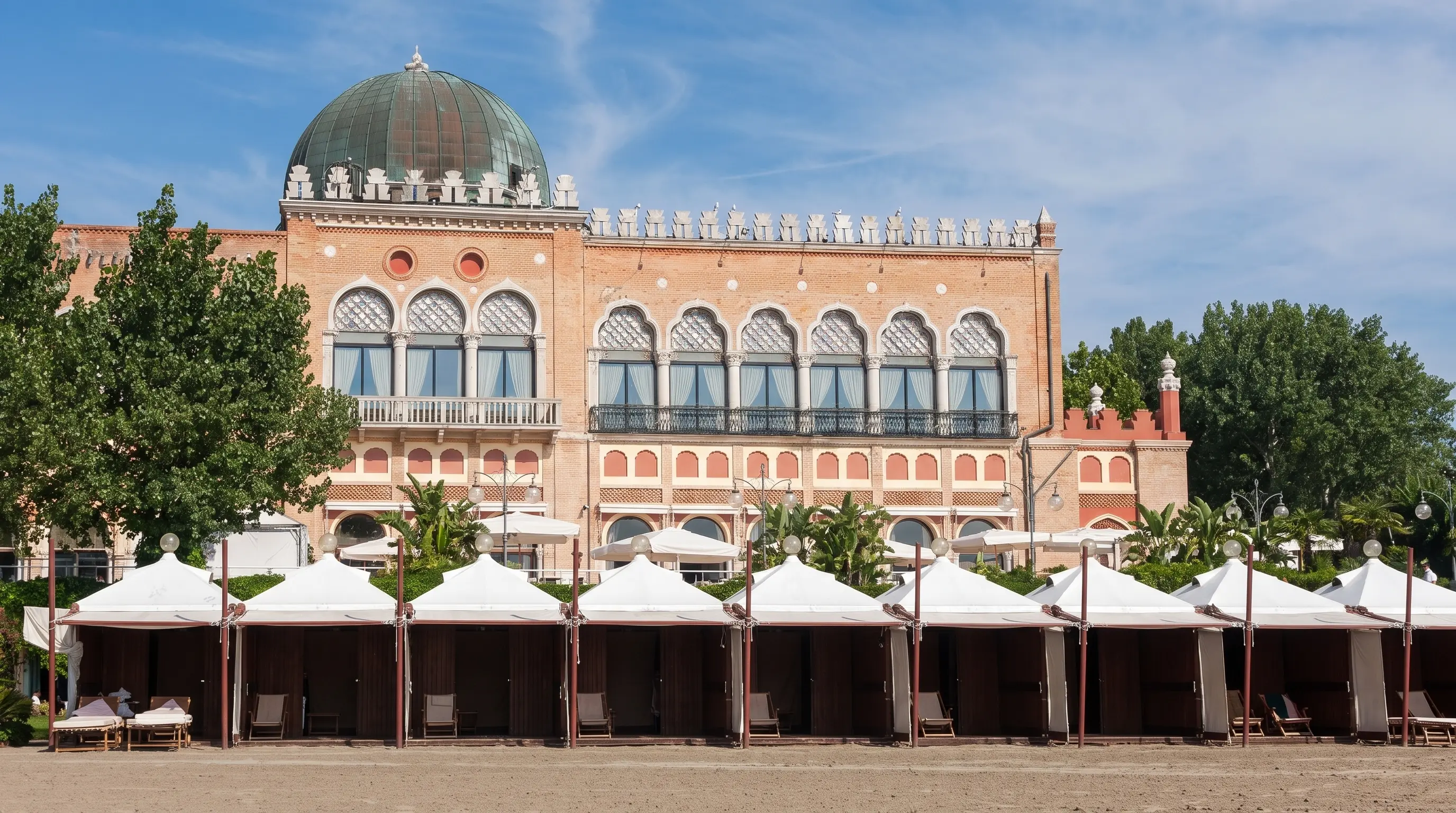
The architecture along the main avenues - Gran Viale Santa Maria Elisabetta and Lungomare Guglielmo Marconi - is in Liberty and Art Nouveau style, built in the early twentieth century when Lido was one of Europe’s fashionable seaside destinations. Grand hotels, elaborate villas, the Casino: this is the glamour of another era, now coexisting with gelato shops and vaporetto queues.
At the southern end of the island, the Oasi Dune degli Alberoni is a WWF nature reserve protecting one of the largest and best-preserved dune systems on the northern Adriatic coast. Dunes reach up to ten metres. Protected bird species nest here - the Kentish Plover and the Little Tern among them. The free beach adjacent to the reserve has no services: it is wild, frequented by locals, and very different from the paid beach clubs to the north.
Malamocco: One of the Oldest Sites in the Lagoon
Malamocco sits in the south-central part of Lido island, separated from the main town by a canal and connected by a series of small bridges. It is one of the oldest settlements in the entire Venetian Lagoon - its roots go back to Roman times, and a local legend holds that the ancient settlement of Metamauco was destroyed by a tsunami around 1110. On calm days, fishermen say the submerged ruins are still visible in the water.
What you find today is a small borgo that functions like a miniature Venice: canals, campielli, a church, a piazza, narrow calli. The Church of Santa Maria Assunta houses the Madonna di Marina. The Palazzo del Podestrà - Gothic in style, overlooking the lagoon - was the seat of Venetian local government until 1339 and today serves as a local museum. Napoleon’s soldiers came through here too: when his forces ordered all the lion sculptures of Venice removed to erase the symbols of the Republic, they never reached the Lido. The original stone lions remain.
The village was the adopted home of Hugo Pratt, creator of Corto Maltese. He set several stories here and frequented the local trattorias. Trattoria da Scarso remains the most cited: a shaded courtyard, fresh fish, local wine. A shaded courtyard, fresh fish caught in the lagoon that morning, local wine at honest prices.
The village has its own culinary identity rooted in the lagoon. The local specialty is spaghetti alla Malamocchina - pasta with mussels (peoci, in Venetian dialect), traditionally prepared for the celebration of the Madonna di Marina. It is one of those dishes that exists almost exclusively in local homes and the handful of trattorias that have been here for decades.
The Murazzi: The Last Great Work of the Serenissima
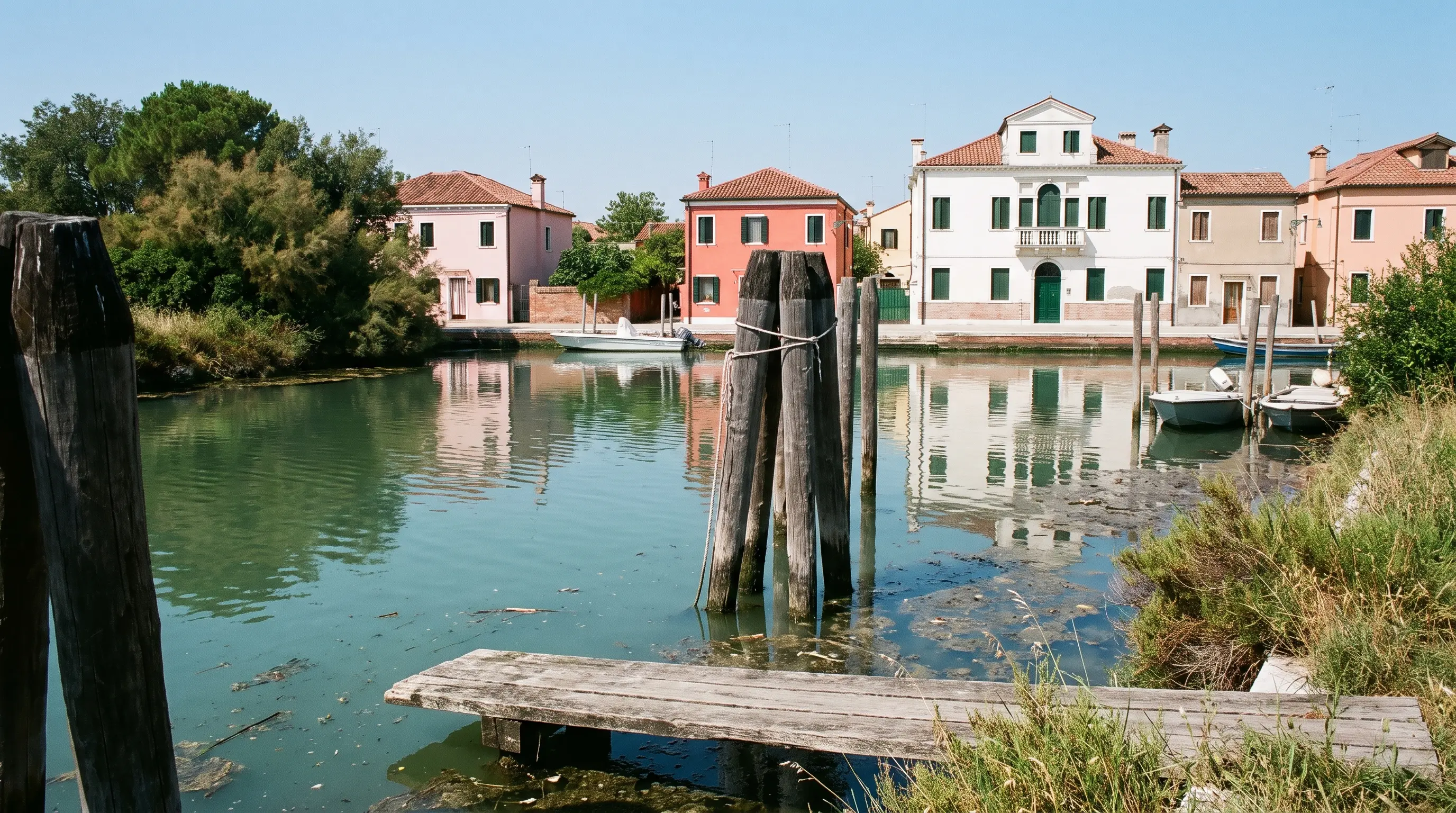
Between Malamocco and Alberoni runs one of the most unusual stretches of coastline in Italy. The Murazzi are the great stone seawalls built by the Republic of Venice between 1744 and 1751, constructed from blocks of Istrian stone to protect the lagoon from the sea. They run for roughly 20 kilometres at a height of around four and a half metres - the last major engineering project of the Serenissima before the Republic fell to Napoleon in 1797.
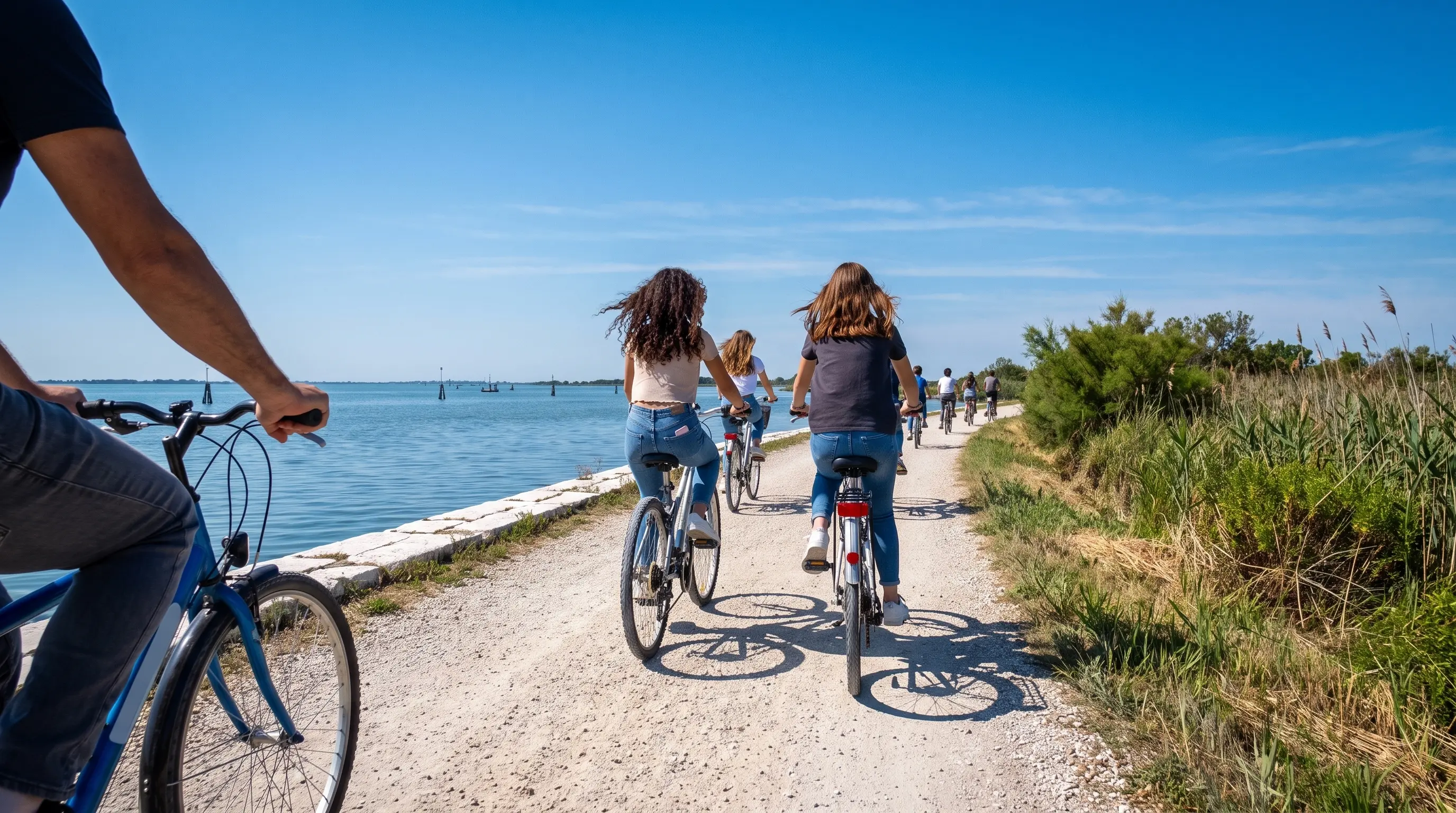
Walking or cycling along the Murazzi is unlike anything else in the Venetian experience. On one side, the Adriatic, on the other, the lagoon. The path is flat and exposed, with changing light and wind.
In the summer months, this stretch of coastline is popular with Venetians, who come here for the free and tranquil beach, away from the private beach clubs. There are no facilities or services, so if you plan to spend some time here, be sure to bring everything you need.
Pellestrina: Fishermen, Murazzi and the Nearly Lost Art of Bobbin Lace
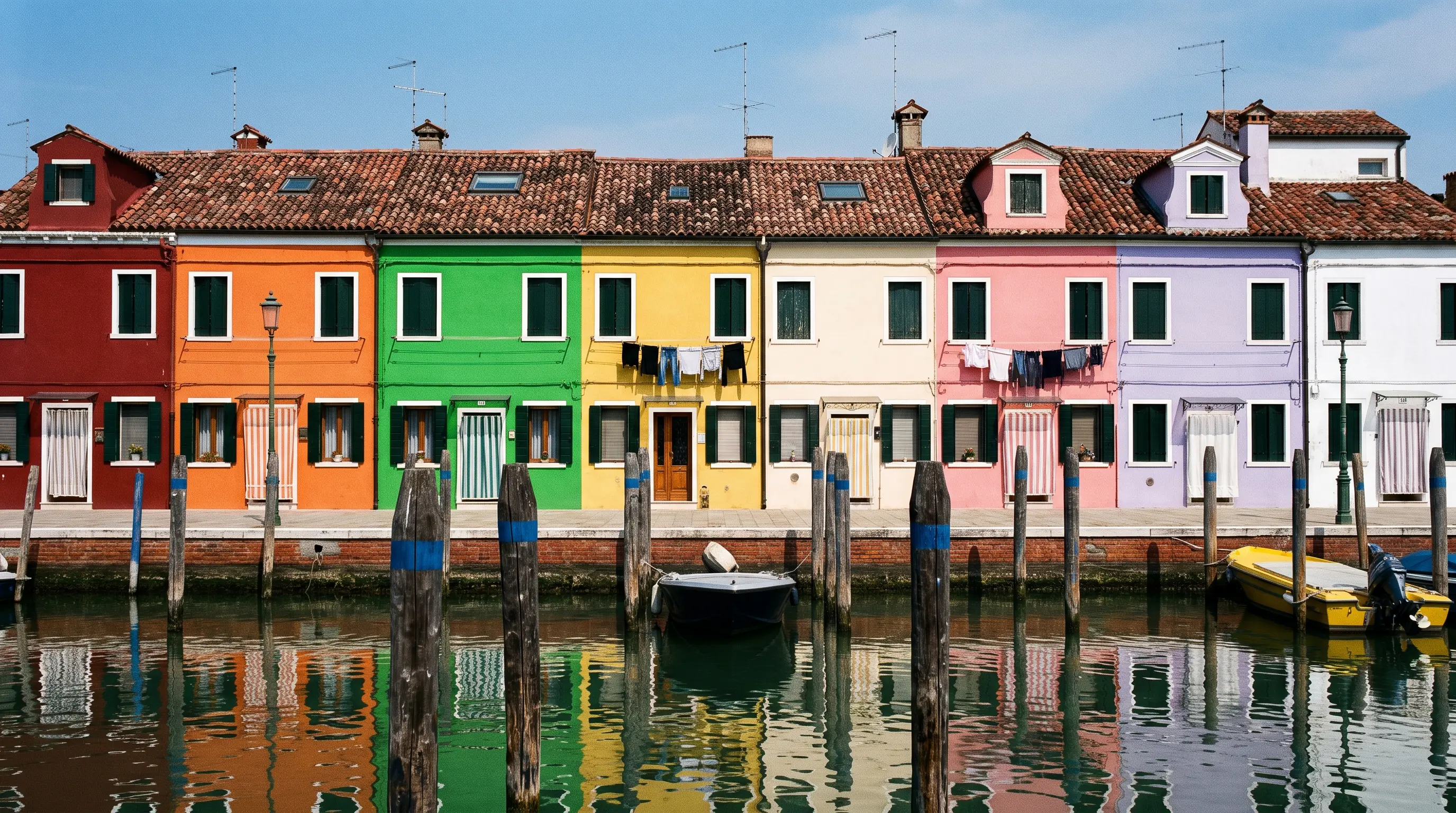
The ferry from Alberoni crosses in a few minutes to Pellestrina, and the shift is immediate. Where Lido has boulevards and hotels, Pellestrina has fishing boats and coloured houses. The island is narrow - in places no more than 25 metres wide - and about 11 kilometres long.
Life here is organised around fishing. The mussels and clams from Pellestrina’s lagoon farms supply much of Venice’s restaurant trade. On the waterfront, nets are laid out to dry. The trattorias serve what was caught that morning: spaghetti alle vongole, grilled fish, mixed seafood platters.
The island also preserves a tradition that has almost disappeared elsewhere in Italy: merletto a fuselli, Venetian bobbin lace. This is hand lace-making using bobbins - a technique distinct from the needle lace more commonly associated with Burano. The practitioners are almost all older women; the craft is passed down within families. If you walk the lagoon-facing streets of Pellestrina village, you may still find women at work outside their doorsteps on warm afternoons.
At the southern tip of Pellestrina, the nature reserve of Ca’ Roman covers 40 hectares of dune environment - one of the most intact on the northern Adriatic. Thousands of migratory birds stop here in spring and autumn.
How to Do It Actively: Cycling and the Slow Boat South
The most satisfying way to experience Lido and Pellestrina is by bicycle. The terrain is entirely flat. The route from the Lido ferry dock to Alberoni is around 12 kilometres; Pellestrina adds another 11 kilometres of cycling alongside the lagoon. Neither requires significant fitness - the routes are suitable for families and occasional cyclists.
Bike hire is available at multiple shops near the Santa Maria Elisabetta ferry dock on Lido. If you bring your own bike from Venice, the ferry from Tronchetto carries bicycles for a fee; since 2024, ACTV has introduced a booking service for transporting bikes on its lagoon routes, which simplifies planning considerably.
A practical full-day itinerary: vaporetto from Venice to Lido in the morning → collect bikes → cycle south through the Art Nouveau streets → stop in Malamocco for lunch → continue along the Murazzi to Alberoni → ferry to Pellestrina → cycle to the Ca' Roman reserve → cycle back to Alberoni → ferry back to Lido → return to Venice by vaporetto.
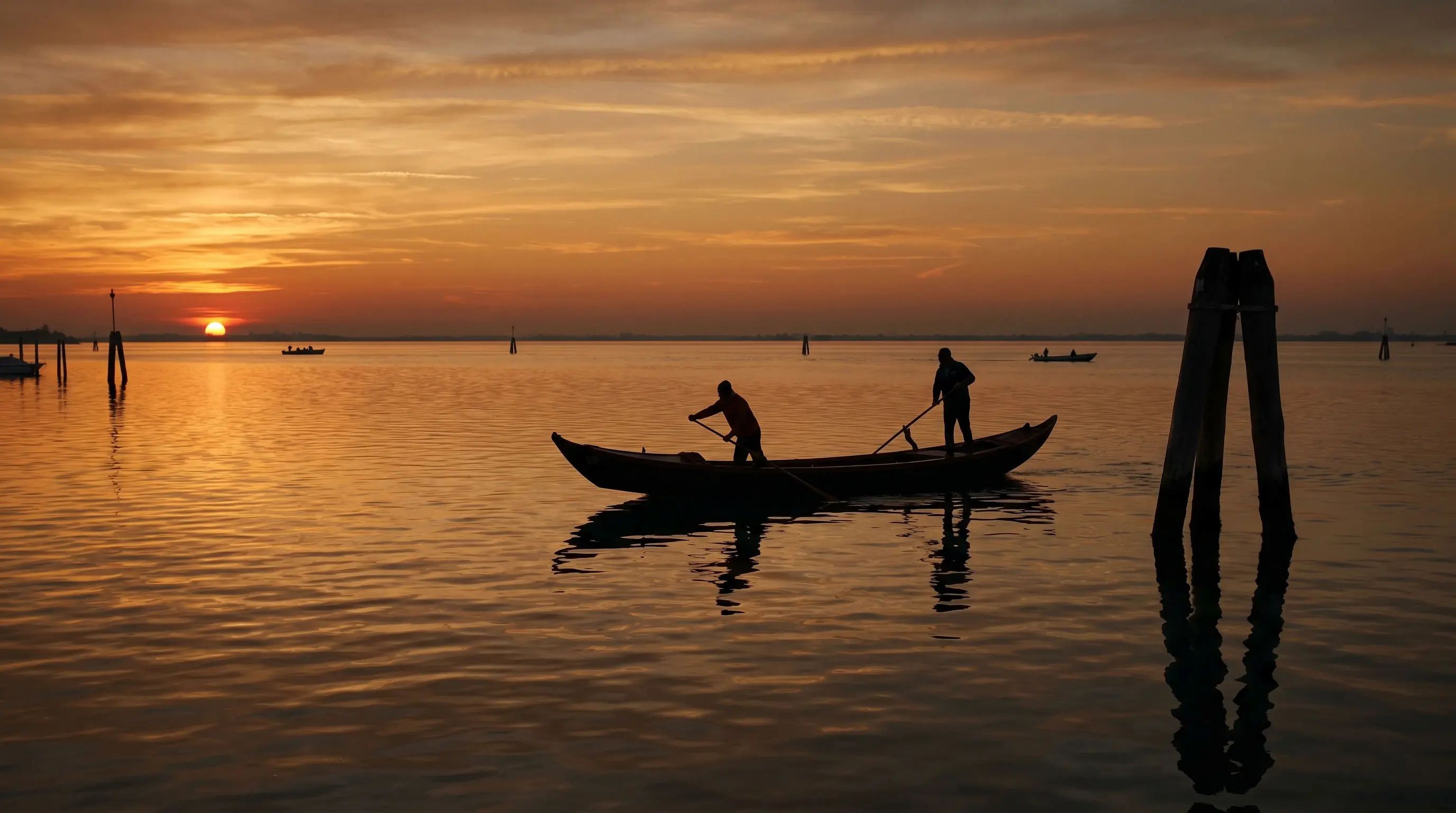
For those who prefer to explore by water, a private motorboat tour of the southern lagoon offers a completely different perspective - approaching Pellestrina and Malamocco from the water, seeing the fishing huts, the mussel farms, and the stillness of the lagoon as Venetian painters have always depicted it.
If you want to arrange a tailored day on the southern lagoon islands with a local guide - by bike, by boat, or a combination - our team at Venice Incoming can build this for you.
Request a Tailor-Made Lagoon Experience →
For those who want to explore the northern lagoon islands in contrast, the Murano & Burano with Panoramic Return tour - 6 hours, multilingual, departing daily - covers the glass and lace islands of the upper lagoon by boat.
Getting There: Logistics and Timing
From Venice to Lido
Vaporetto line 5.1 runs from Piazzale Roma down the Grand Canal to Lido Santa Maria Elisabetta - journey time approximately 45 minutes from the train station. Lines 5.1 and 14 from San Marco–San Zaccaria are faster, around 20 minutes. The 14 runs direct to Lido every 30 minutes. A standard ACTV day ticket covers all vaporetto travel including this route. If travelling with a bicycle or a car, the ferry from Tronchetto runs approximately every hour.
From Lido to Pellestrina
Bus 11 from Lido Santa Maria Elisabetta runs the length of the island and connects with a ferry crossing to Pellestrina. The combined bus and ferry journey takes roughly 40–50 minutes.
By Bike
Cycling from the Lido ferry dock to Alberoni takes around one hour at a relaxed pace. Cycling the length of Pellestrina takes another 45–60 minutes depending on stops.
Practical Notes
The free beach on the Murazzi has no facilities - bring water and food. The paid beach clubs on the northern Lido lungomare have full services including changing rooms. Malamocco is accessible by bus from central Lido (direction Pellestrina, stops Malamocco Centro).
FAQ
Is Lido di Venezia worth visiting?
Yes, particularly if you want a different pace from the historic centre. Lido has Blue Flag beaches, Art Nouveau architecture, and the village of Malamocco - things that have nothing to do with the tourist Venice. In summer it functions as a genuine seaside town with Venice a short vaporetto ride away.
Can you cycle on Lido and Pellestrina?
Yes - and it is one of the best ways to see both islands. The terrain is completely flat and suitable for all fitness levels. Bike hire is available near the Lido ferry dock. ACTV now offers a bike transport booking service that makes it easier to bring your own bicycle on lagoon ferries.
What is Malamocco and why should I visit?
Malamocco is one of the oldest settlements in the Venetian Lagoon, a quiet medieval borgo on the southern part of Lido island. It looks like a small-scale Venice — canals, campielli, stone bridges — but with almost no tourists. It is associated with Hugo Pratt and the Corto Maltese stories, and its trattorias serve some of the best fish in the lagoon.
Is Pellestrina worth the trip from Venice?
Pellestrina is worth it for the combination of fishing village atmosphere, fresh seafood, the Murazzi walls, and the Ca’ Roman nature reserve. It is more remote than Lido and the further south you go, the quieter it becomes. If you have a full day and a bicycle, Lido and Pellestrina together make one of the most satisfying itineraries in the Venice area.
What is the bobbin lace tradition of Pellestrina?
Merletto a fuselli is a hand lace-making technique using bobbins, distinct from the needle lace of Burano. It is practised almost exclusively by older women in Pellestrina and is one of the last surviving examples of this craft in the Veneto. On warm days, you may still see practitioners at work outside their homes.
Can I do Lido and Pellestrina without a guide?
Both islands are easy to navigate independently. That said, a local guide adds significant value - particularly for Malamocco’s history, the Murazzi’s engineering story, and the fishing culture of Pellestrina, which is not well documented in English. Contact Venice Incoming and we can arrange a tailored day for you.
Plan Your Next Italian Adventure with a Trusted Local Partner
Wherever Italy calls you - through Venice’s quiet canals, the vineyards of the Veneto, or the country’s wider cultural landscapes - travel becomes richer with someone local by your side. With over 20 years of experience crafting journeys for travelers, groups, and global partners, Venice Incoming creates experiences that are seamless, authentic, and shaped by true on-the-ground insight.
Start planning your journey with our most useful resources:
- Multi-Day Travel Packages
- Tailor-Made Itineraries
- Daily Tours & Activities in Venice and Veneto
- Private Transfers Services
- B2B & Group Travel Support
Wherever you choose to go next, we’re here to help you experience Italy with confidence and local expertise.